
Emergency Care for Foster Kittens
Watch this video to get started!
Keeping newborn kittens warm is essential since they can’t regulate their body temperature—use a low heating pad or safe alternatives, but always leave space for them to move away and never place them directly on heat. Create a small, cozy environment to help them feel secure, just like they would with their mother. As they grow, gentle daily handling and positive socialization will help them become confident, happy cats.
Hygiene, Emergency Care, and Interventions
Newborn kittens are extremely fragile, which makes hygiene one of the most important parts of their care.
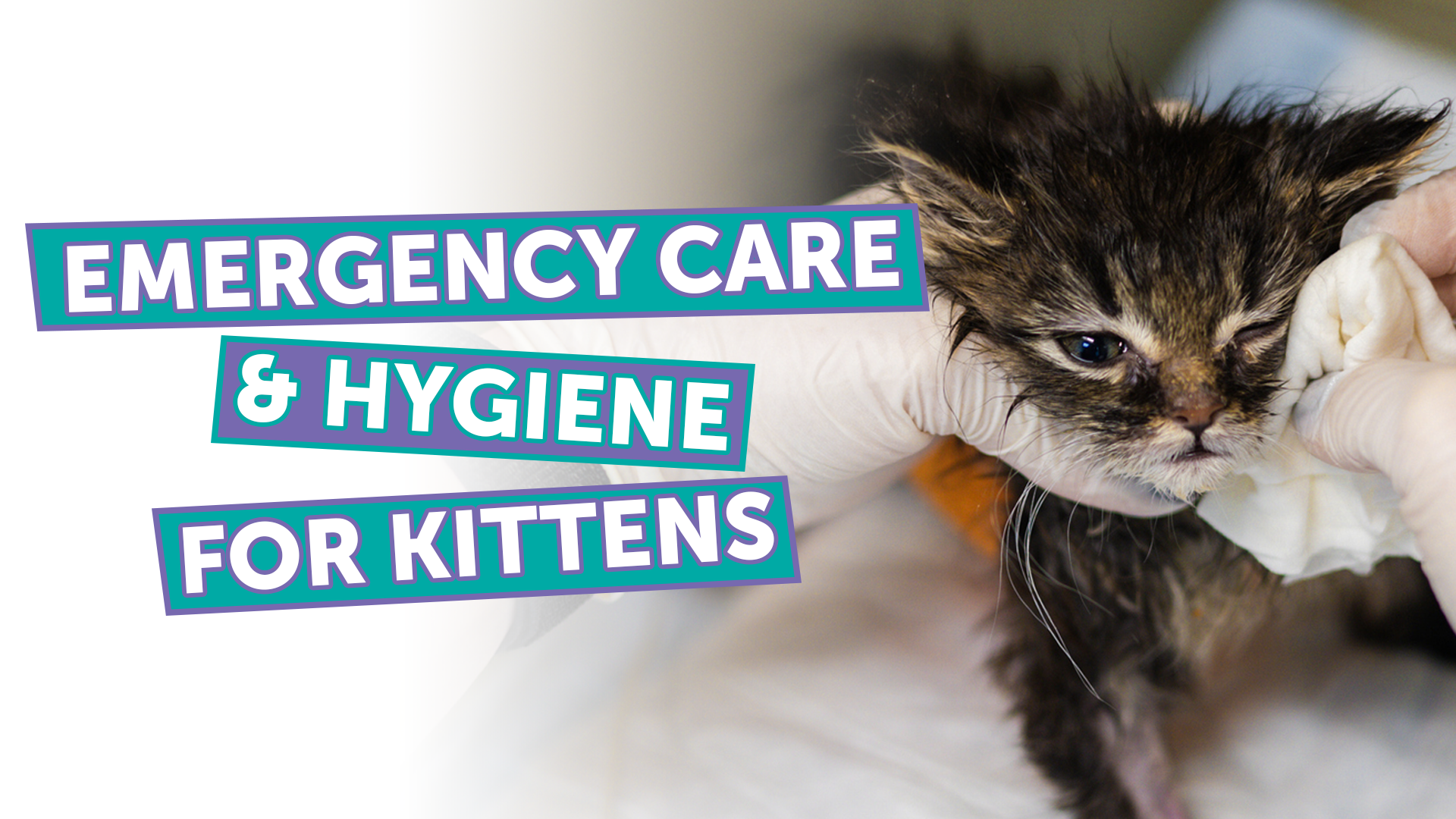
Start by keeping their face clean. Gently wipe away any formula or food residue using a soft, damp washcloth, paying special attention to the areas around the mouth and eyes.
Always wash your hands thoroughly before and after handling kittens. If a kitten becomes ill, separate them from other pets to help prevent the spread of infection.
Daily cleaning is essential. Bottles, bedding, litter areas, food bowls, toys, and any other supplies should be cleaned every day using warm water and mild soap. A consistently clean environment helps kittens stay healthy, comfortable, and less stressed.
From time to time, you can disinfect supplies using a kitten-safe solution. A commonly used option is a diluted bleach mixture—1 tablespoon of bleach per 1 cup of water, or 1 teaspoon of bleach per 2 cups of water. Be sure everything is fully rinsed and dried before reuse.
Knowing What to Do in an Emergency
Understanding how to respond quickly in an emergency can make a critical difference in a kitten’s survival.
Newborn kittens often suckle for comfort, especially if they are orphaned. However, they may sometimes begin suckling on each other, which can lead to injuries. Monitor them closely to ensure they are feeding properly, and separate them if necessary to prevent harm.
If a kitten is cold, limp, or unresponsive, warming them is the first priority. Do not attempt to feed them until their body temperature has returned to normal.
Other warning signs to watch for include refusal to eat, liquid diarrhea, bloating, or failure to gain weight. If you notice any of these symptoms, contact The Animal Foundation’s foster team right away to schedule an appointment.
In urgent situations, use your Fading Kitten Kit provided at pickup. It contains essential supplies and step-by-step instructions for managing the three most common emergencies:
- Dehydration
- Hypothermia
- Low blood sugar
Follow the guidance included in the kit for each condition.
In these moments, prompt and steady care can be life-saving. After addressing the immediate issue, contact The Animal Foundation’s foster team so they can provide follow-up support and next steps in care.