
Bottle Feeding Kittens
Watch this video to get started!
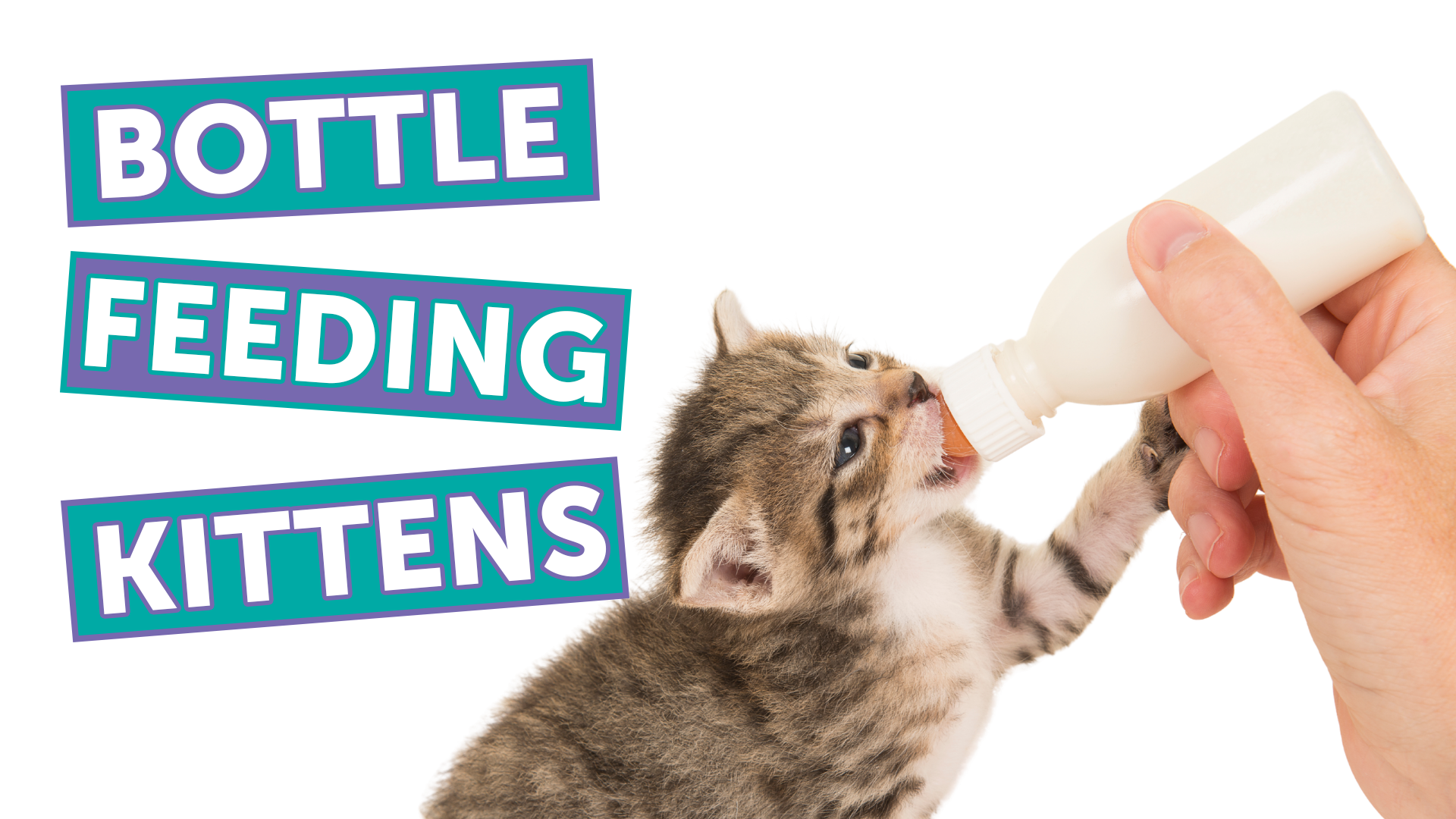
Newborn kittens must be bottlefed every 2–3 hours (even overnight), with warm formula. Let them latch and eat at their own pace. Watch closely for issues like milk coming from the nose or signs of dehydration. Always feed the kitten belly down at about a 45-degree angle. Never feed a kitten on their back.
Feeding Foster Kittens
Newborn kittens need to eat every 2–3 hours, including overnight. This frequent schedule is essential for keeping them hydrated and stable.
Start by preparing the bottle. Warm the formula and shake it well. Always test a few drops of the formula on your wrist first—it should feel comfortably warm, never hot. Choose a quiet, comfortable spot and place the kitten on your lap or a flat surface. Always feed kittens belly down at about a 45-degree angle. Never, ever feed a kitten on their back, as this increases the risk of aspiration.
Support the kitten with your non-dominant hand and allow them to latch and suckle at their own pace. A good latch looks active. You may even notice small signs like ear wiggles, which can indicate they’re engaged and feeding well. If milk comes out of the kitten’s nose, stop feeding immediately. This can be a sign of aspiration. Hold the kitten with their head gently pointed downward and softly pat their back to help clear the airway.
Not every feeding goes perfectly. Some kittens may struggle to latch at first or feed from the side of the mouth. As long as they are swallowing, that’s okay—stay calm and keep trying. If the kitten is squirmy or hard to handle, gently wrap them in a small blanket or towel. This “burrito wrap” helps them feel secure and makes feeding easier.
Be patient and take your time. These frequent feedings are critical, and you are their lifeline. Also, keep a close eye out for signs of dehydration. You can gently pinch the scruff of their neck—if the skin stays tented or doesn’t quickly return to place, they may need additional support or fluids. If anything feels off or you’re unsure, reach out to the foster team. It is always okay to ask for help when caring for newborn kittens.