
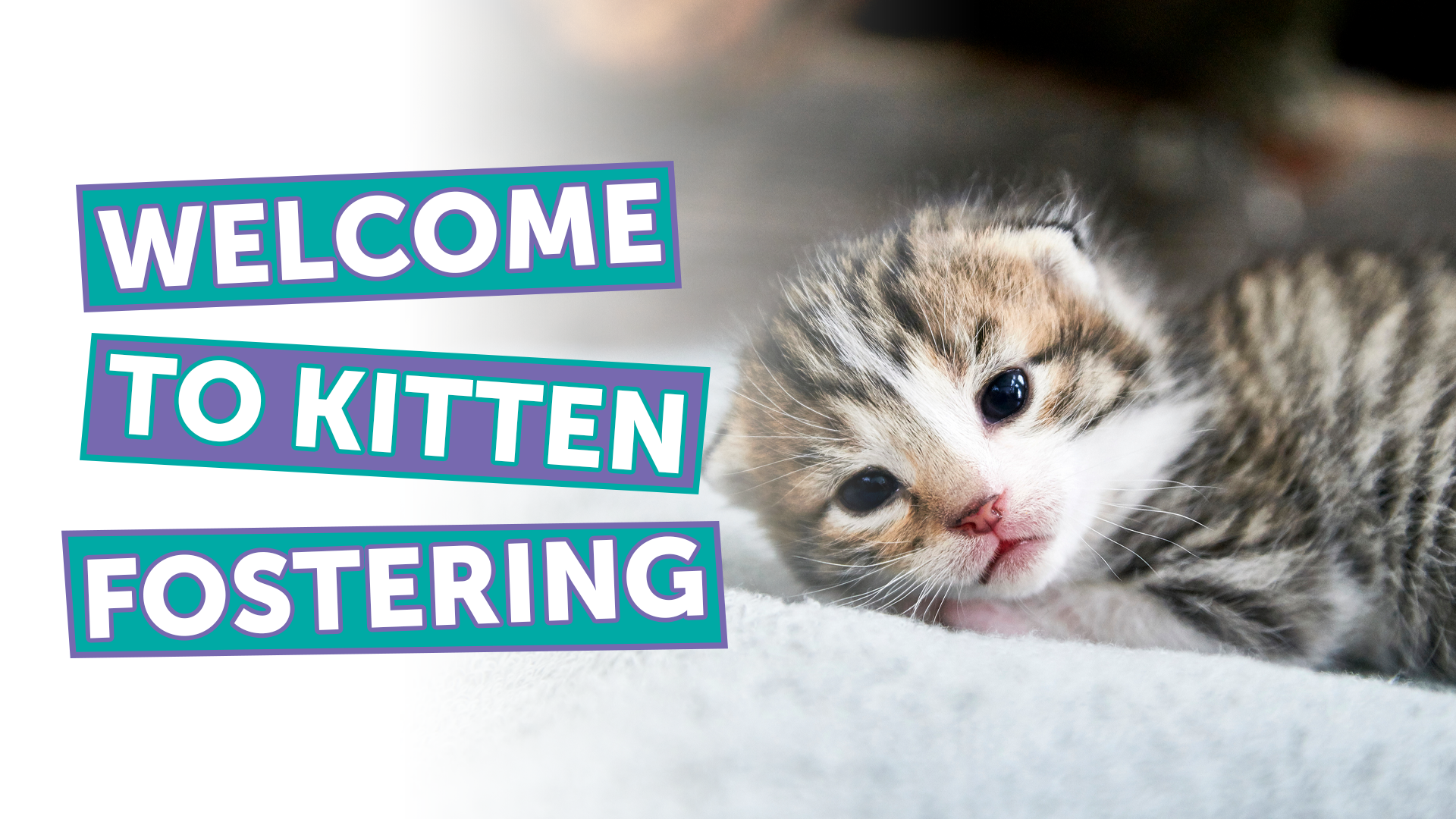
Welcome to Kitten Fostering!
Watch this video to get started!
Welcome to the Itty Bitty Kitty Committee at The Animal Foundation—our fragile newborn kittens at the shelter depend on you for hands-on care like bottle feeding, weighing, and monitoring their health during their first critical weeks.
Welcome and What to Expect
Shelter kittens need your help to survive.
First, it’s important to understand a kitten’s age, because that tells you exactly what kind of care they need. Newborns have closed eyes and folded ears, and they rely completely on bottle feeding and warmth to survive. Around two weeks old, their eyes begin to open and they start to become a bit more aware of the world around them. By four weeks, they’re getting more active, starting to explore, and showing interest in solid food. Those first four weeks are the most critical—and where your care makes the biggest difference.
Fostering neonatal kittens can feel a little intimidating at first, especially when you’re adjusting to feeding schedules or waking up in the middle of the night. But the reality is that each feeding only takes a few minutes, and those small moments add up to a huge impact on their survival and development.
Your daily routine will be simple but important: stimulate, weigh, feed, and weigh again. This helps ensure they’re eating properly, growing steadily, and staying healthy. It might seem like a lot in the beginning, but most people get comfortable with the process very quickly.
Fostering is incredibly rewarding, but it is also a big commitment. Neonatal kittens are fragile and need consistent care and attention. You’ll be tracking their weight, watching for any signs of illness, and adjusting care as they grow. And while it’s important to be prepared, it’s also important to know that not every kitten will survive, even with your best efforts. That can be one of the hardest parts of fostering.
Neonatal Survival Statistics
Understanding survival rates helps highlight how vulnerable neonatal kittens are:
- With mother: 75–95% survival rate
- In foster care (orphans): 60–85% survival rate
Losing a Foster Kitten
Losing a kitten is one of the hardest experiences any foster caregiver can face. In this video, Hannah Shaw (The Kitten Lady) shares compassionate guidance and practical tips for coping with that grief.

You’re not in this alone. The Animal Foundation’s team is here to support you every step of the way, offering guidance, answering questions, and helping you feel confident in caring for these kittens.
In the end, fostering is about showing up for animals who need it most—and giving them a chance they wouldn’t have without you.