Lost a pet? Found a pet? Call (702)760-PETS !

Home » Pet Resource Center » Sulcata Tortoise Care Guide: Everything You Need to Know

Sulcata Tortoise Care Guide: Everything You Need to Know

Sulcata Tortoise Care Guide

Thinking about adopting a sulcata tortoise? These gentle giants are fascinating companions—but they’re also a long-term commitment. With lifespans reaching 50–80+ years and adult sizes of over 100 pounds, sulcatas (Centrochelys sulcata) are not your average pet. This guide will help you understand how to care for one of the world’s largest tortoise species so you can keep your shelled friend happy and healthy for decades to come.

Housing: Big Tortoise, Big Space

Sulcatas are built for roaming, digging, and basking. Their housing needs change drastically from hatchling to adult.

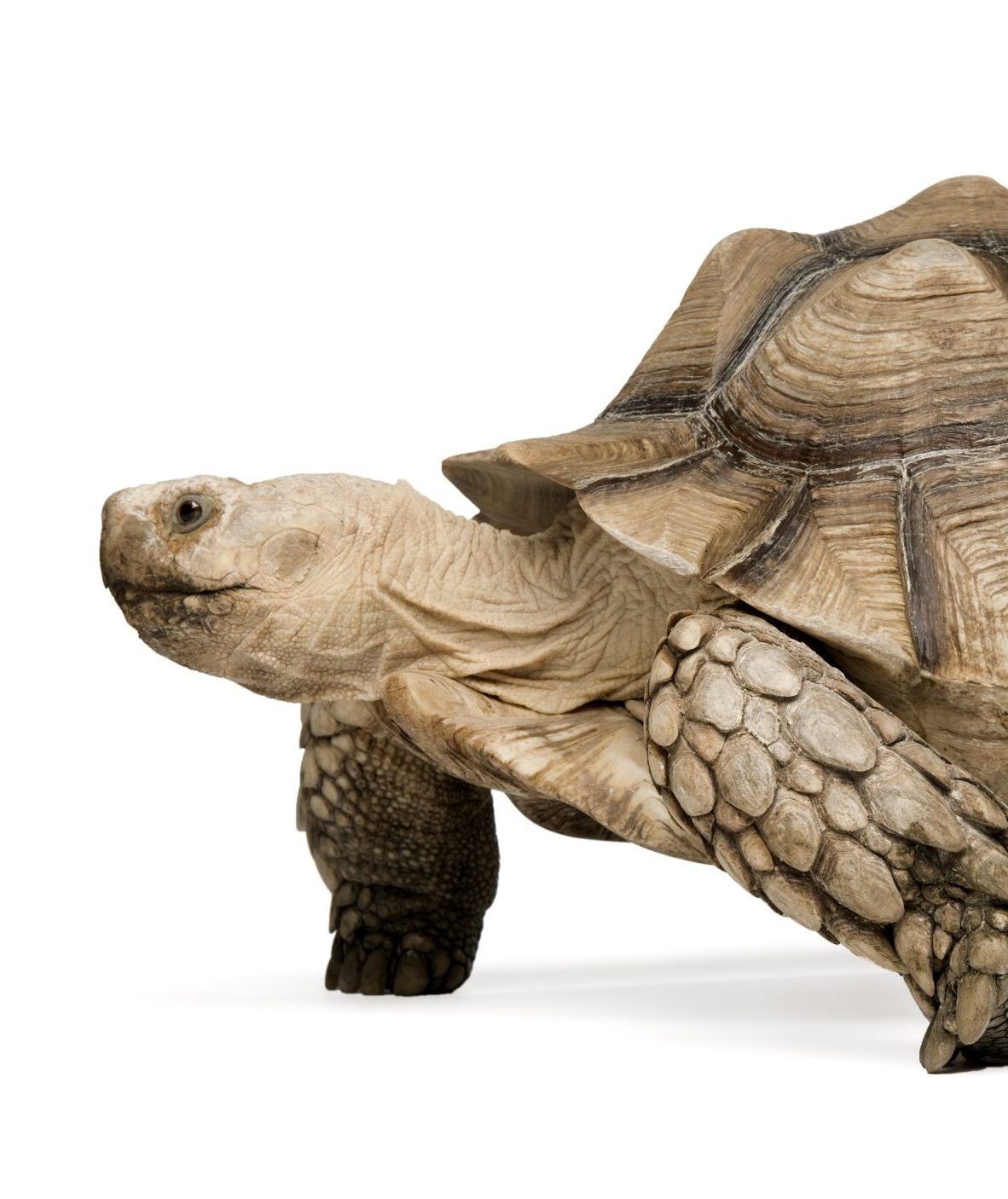
Sulcata Tortoise
Juveniles (under 10″ shell length)
  • Enclosure size: At least 8′ x 4′ (32 sq ft) indoors
  • Temps: Basking 95–105°F; ambient 80–90°F; never below 70°F
  • Humidity: 40–60% with daily warm water soaks
  • Lighting: 12–14 hrs UVB (Reptisun 10.0 or Mercury Vapor bulb)
  • Substrate: 4–6” soil/sand mix for digging
  • Hide: A damp hide box with moss or soil to prevent dehydration
Adults (over 10″ shell length)
  • Outdoor space: At least 20′ x 30′ with secure fencing sunk 12” underground (they’re escape artists!)
  • Shelter: Heated shed/tortoise house for cold or wet weather
  • Temps: Day 85–95°F; heated shelter above 60°F at night
  • Environment: Native soil, grass, weeds, and an area for burrowing
  • Protection: Predator-proof fencing and overhead cover

Fun Fact

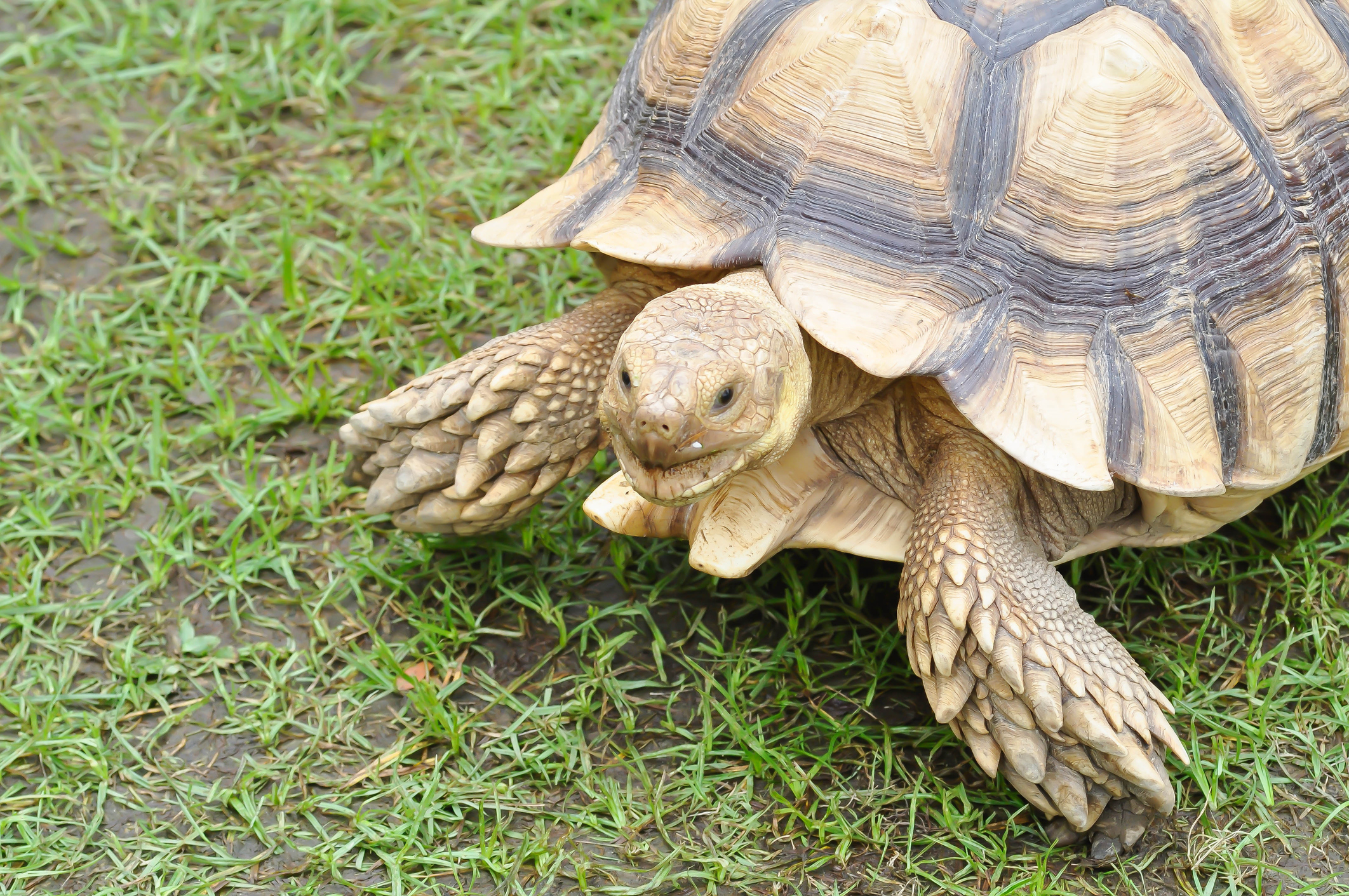
Close-up Sulcata tortoise eats vegetables

Diet: A Grass-Guzzling Machine

Sulcatas are herbivores with a fiber-heavy diet, similar to a cow’s.

  • Staple foods: Grass and hay (Bermuda, orchard, timothy)
  • Supplements: Edible weeds and flowers (hibiscus, clover, dandelion)
  • Avoid: Fruit, animal protein, spinach, kale
  • Water: Fresh, shallow water dish available daily

Supplements: Calcium with D3 twice a week; reptile multivitamin once a week

Fun Fact

Health & Veterinary Care

Like all reptiles, sulcatas benefit from proactive veterinary care.

  • First check-up: Fecal test and physical exam soon after adoption
  • Monitor for:
    • Runny nose or puffy eyes (respiratory illness)
    • Poor appetite or lethargy
    • Soft or peeling shell
    • Pyramiding shell (raised, bumpy growth—often due to poor diet or humidity)

Tip: Find a vet experienced in reptiles before you need one. Emergency care for tortoises can be harder to find than for dogs or cats.

More from Pet Resource Center