Our website hasn't updated since 6 PM on Tuesday, March 17. If you're looking for a lost pet, please call (702)760-PETS while we troubleshoot this issue.
Welcoming a rabbit into your life is exciting—you’re gaining a curious, intelligent companion who can bring years of joy when given the right care. To make things easier, we’ve created a three-part Rabbit Care Guide. Each section covers an important part of your bunny’s life with you:
Part 1 (this guide): What you need to know before bringing your rabbit home—housing, supplies, and the basics of diet and enrichment.
Part 2 (coming soon): Understanding your bunny—how they communicate, how to build trust, and how to interact safely.
Part 3 (coming soon): Keeping your bunny healthy—vet care, grooming, and how to spot common health issues.
This first guide focuses on what you’ll need to get started: creating a safe space, providing proper nutrition, and making sure your new bunny feels comfortable from day one. With the right setup, you’ll be on your way to building a strong bond with your new companion.
Housing
Indoors vs. Outdoors
A rabbit’s home environment makes a big difference in their health and happiness. Rabbits that live indoors typically live much longer—7–12 years compared to just 1–5 years for outdoor rabbits. Outdoors, they’re exposed to predators, extreme weather, and harmful substances like pesticides. Even the presence of predators nearby can cause life-threatening stress.
That’s why your rabbit should live primarily indoors, where it’s safe, warm, and close to you. Outdoor playtime is wonderful—but only if it’s in a secure, supervised space free from toxic plants and chemicals.
Enclosures
Every rabbit needs a safe space of their own. Think of it as a “bunny bedroom”—a place to rest, hide, and relax. The enclosure should be roomy enough for food, water, a litter box, and toys, with space left over to stretch and hop. At minimum, the enclosure should be four times the length of your rabbit and tall enough for them to stand without ears touching the top.
Common setups include:
Exercise pens: Affordable, easy to clean, and flexible for different spaces.
Cages and hutches: Often too small or restrictive, and not recommended by most rabbit rescues.
Remember: the smaller the enclosure, the more daily exercise time your bunny needs. Rabbits should have at least 2 hours each day to run, jump, and binky.
Fun Fact
Rabbits can jump up to three feet high and ten feet long in a single leap! That’s why they need plenty of space to stretch their legs and show off their famous “binkies”—joyful jumps and twists that mean your bunny is happy.
Litter Boxes
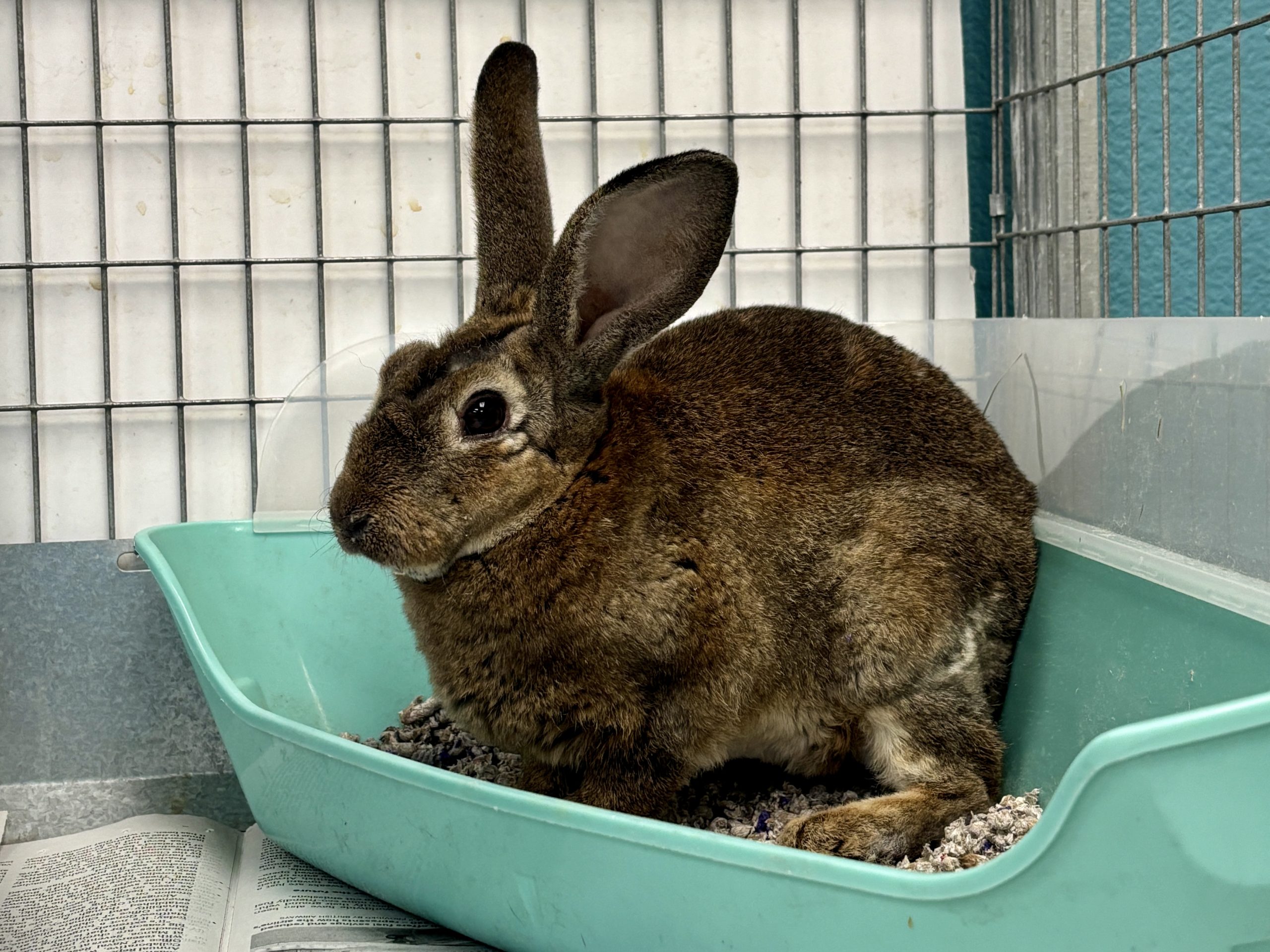
Rabbits can be just as tidy as cats with the right setup. A large plastic litter box—big enough for your rabbit to stretch out—is best. Fill it with safe options like woody pellets or recycled paper litter, and avoid clumping cat litter, corn cob litter, or wood shavings, which can be dangerous. Place fresh hay in or over the litter box, since rabbits prefer to eat and “go” at the same time.
Fun Fact
Domestic rabbits can live 10+ years with proper indoor care, almost as long as a dog or cat.
Food & Water Dishes
Use heavy ceramic or glass bowls for food and water to prevent tipping. Water bowls are healthier than bottles, as they allow rabbits to drink freely and stay hydrated. Fresh water should be available at all times, and hay should always be accessible—ideally placed near or in the litter box.
Hideaway Boxes
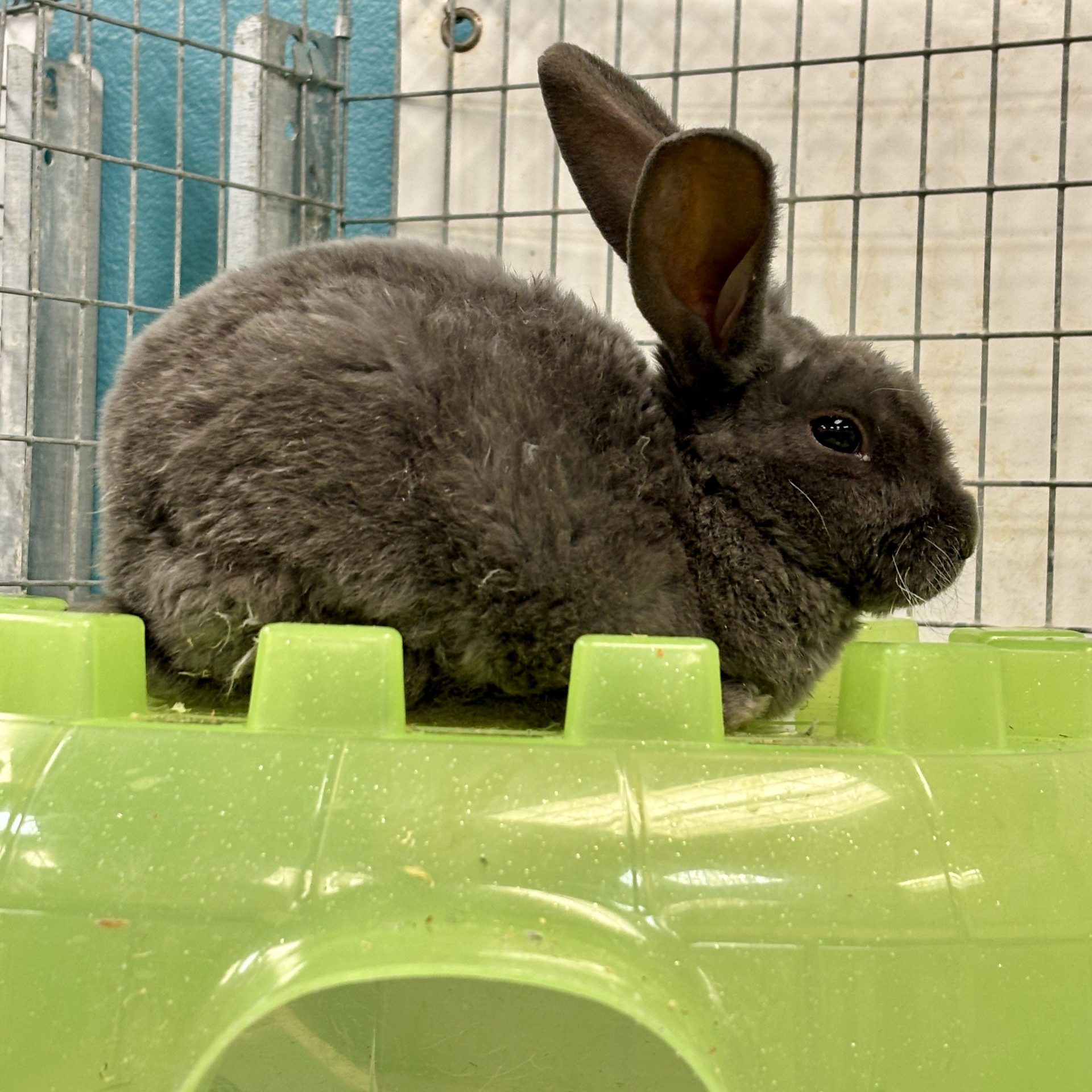
Your rabbits need a secure place within their enclosure to hide in. Hideaway boxes can include plastic shelters, wicker tunnels/tents, wood houses, or cardboard boxes with an entryway cut out of the side.
You can find hideaway boxes for FREE just by visiting your local Costco or Sam’s Club (they have lots of empty boxes they will allow you to take). Many commercially available hideaways run on the small side, so make sure to check the dimensions and choose something that is large enough for your rabbit to lie down in.
Toys
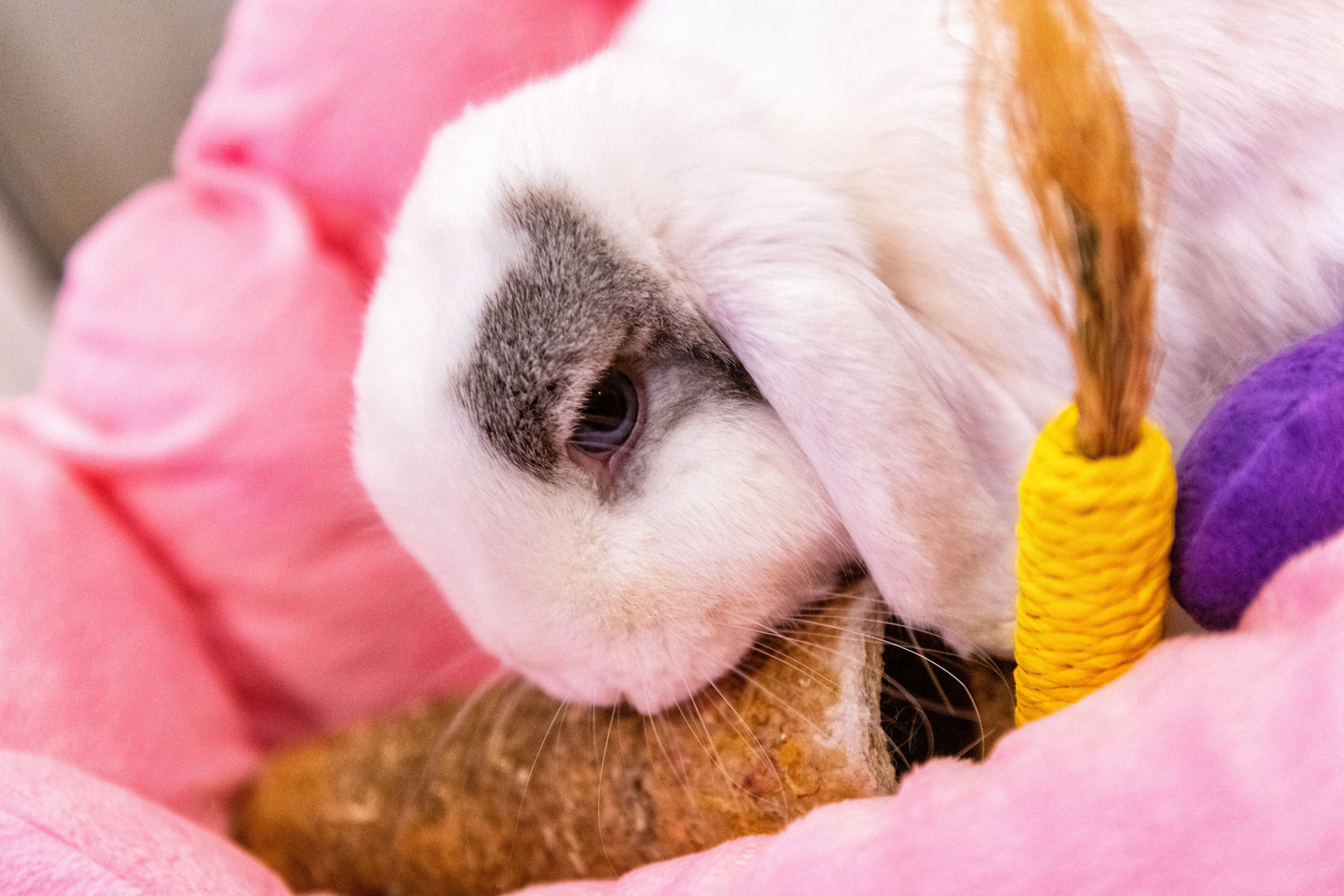
A busy bunny is a happy bunny! Toys help keep your rabbit entertained while preventing destructive chewing on carpets or furniture. Chew toys also keep their constantly growing teeth healthy. Great toy options include:
Rabbits thrive on a simple but balanced diet: 80% hay, 10% vegetables, 5% pellets, and 5% healthy treats.
Hay: Always available in unlimited amounts.
Veggies: Offered daily, with careful moderation of high oxalic acid greens.
Pellets: Fed in small amounts depending on age and weight.
Treats: Given sparingly due to sugar content.
Age
Hay
Pellets
Veggies
Treats
7 weeks – 7 months
Unlimited alfalfa hay
Unlimited
Introduce in tiny amounts one at a time
keep them simple for example, romaine lettuce
None
7 months – 1 year
Transition from unlimited alfalfa hay to timothy hay
Slowly mix in timothy hay over time to not cause digestive issues
5 tbl spoons per 6 lbs. body weight
Increase gradually to 1–2 cups per 6 lbs. body weight
1-2 small treats a day
> 1 year
Unlimited timothy hay
*3 tbl spoons per 6 lbs. body weight
1–2 cups per 6 lbs. body weight
1-2 small treats per day
*If you own a small rabbit breed that weighs over 6lbs it is likely overweight and should have no pellets, and reduced treats and veggies until it returns to a healthy weight.
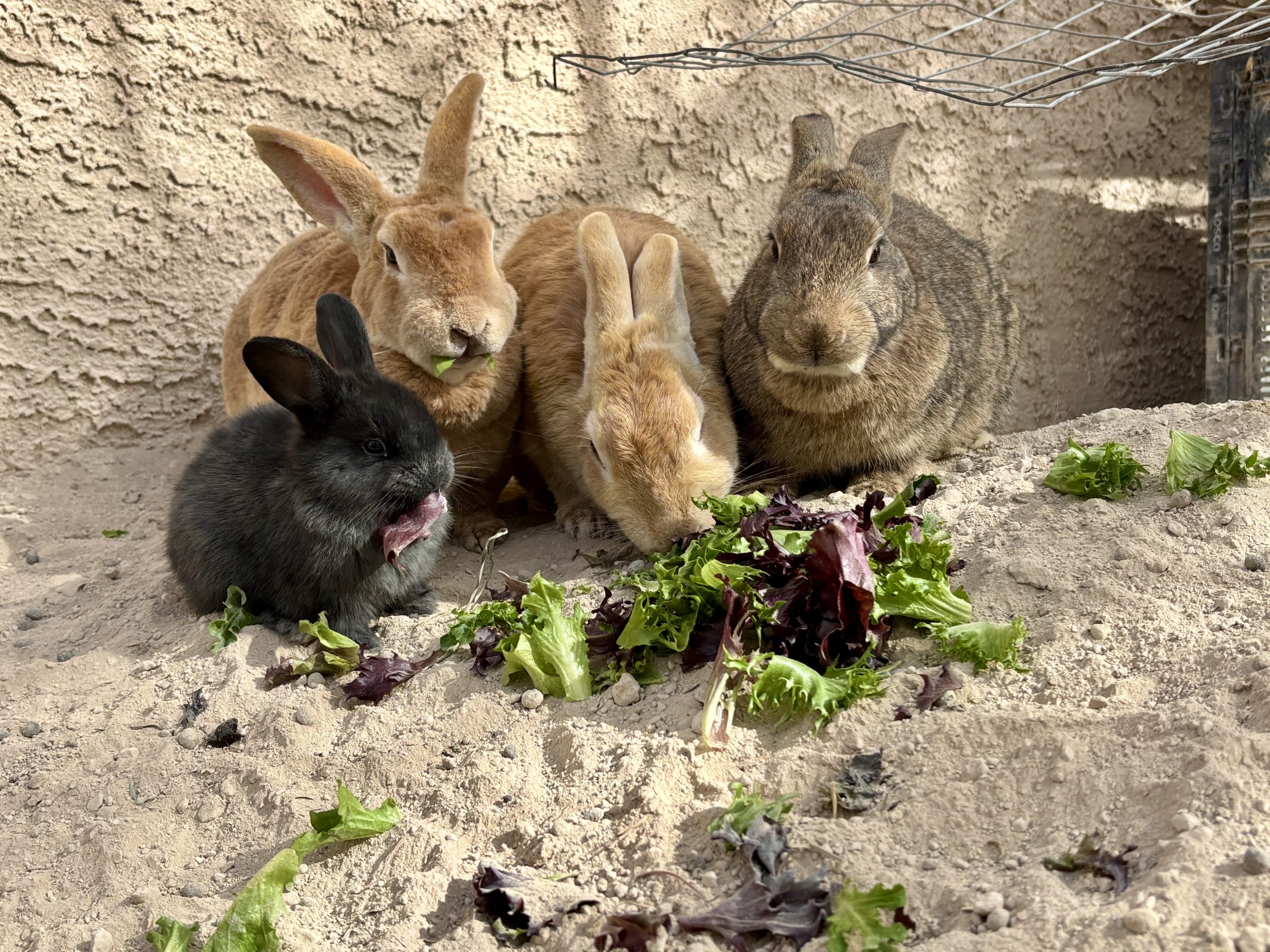
High-quality hay brands include Oxbow and Small Pet Select. Avoid pellets with seeds, nuts, or colorful “treat” pieces. For vegetables, rotate safe leafy greens, limiting those high in oxalic acid. Safe fruits and starchy veggies like carrots can be offered as occasional treats.
Veggies
Introduce vegetables slowly, one type at a time, to see how your bunny reacts. If loose stools occur, avoid that veggie and return to a hay-based diet until digestion normalizes.
Some greens are high in oxalic acid and should be limited to no more than one variety per day. Non-leafy vegetables should also be fed sparingly, as many are higher in sugar or can cause gas.
A good rule of thumb: about 1 tablespoon of non-leafy veggies per 2 lbs. of body weight daily.
Leafy Greens & Oxalic Acid
Many leafy greens are excellent for rabbits, but some contain oxalic acid—a natural compound found in plants. In small amounts, oxalic acid isn’t harmful, but if rabbits eat too much of it over time, it can contribute to kidney or bladder stones. To keep your bunny safe, only one of the daily green varieties you feed should be from the “high oxalic acid” list below. Rotate your greens regularly to provide variety and balance.
Arugula Endive Escarole Kale Red/Green Leaf Lettuce Romaine Lettuce Spring Greens Turnip Greens Dandelion Greens Mint Basil Cilantro Radicchio Bok Choy Fennel
Non-Leafy Greens
Broccoli/Broccolini Edible Flowers: (Roses, Pansies, Hibiscus, Dandelion) Bell Peppers Chinese Pea Pods Brussel Sprouts Summer Squash Zucchini Squash Pumpkin
A Lifelong Friendship
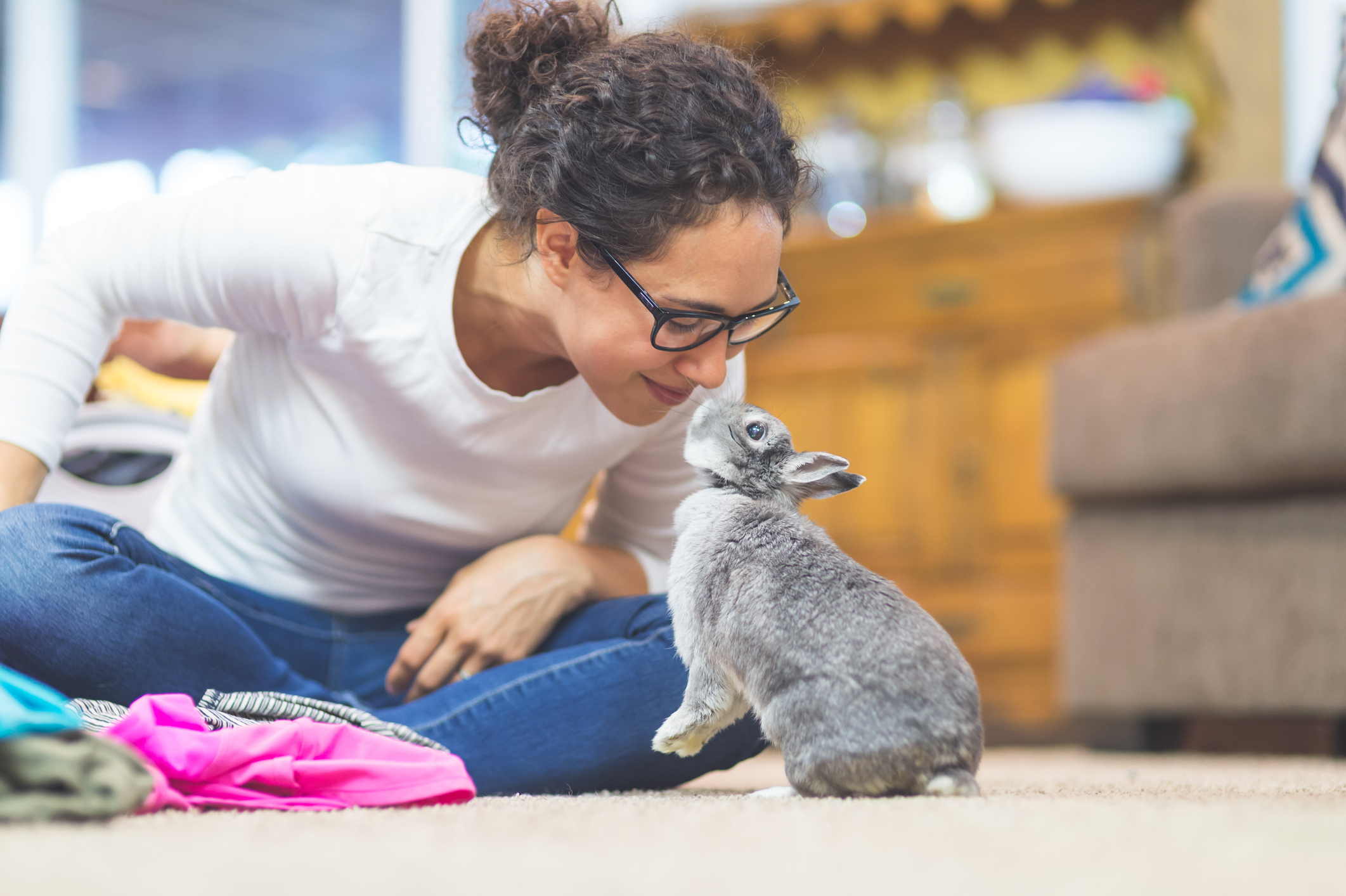
Bringing a rabbit into your home is more than an adoption—it’s the beginning of a special bond. Rabbits are gentle, intelligent creatures who thrive when they feel safe and loved. With patience, consistency, and care, your bunny will come to trust you, greet you with excitement, and share their quiet, joyful moments by your side.
Thank you for opening your heart and home to a rabbit. By giving them a chance, you’re not only changing their world—you’re discovering just how much joy a little bunny can bring into yours.